
Innovative frequency conversion: Reflective use of thin, nonlinear crystals to increase efficiency in laser technology
Abstract
The invention describes a method for frequency-converting laser beams. The laser beam is reflected off the back of a nonlinear, in particular very thin, anisotropic crystal in order to integrate a heat sink and to improve the efficiency and beam quality during frequency doubling.
Advantages
- Efficient cooling through the reflective use of thin crystals => reduction of thermal effects and the associated reduction in conversion efficiency and beam quality.
- Reduction of thermal effects: Temperature gradient approximately in the direction of beam propagation => resulting in fewer thermal aberrations in the beam profile.
- Simpler manufacturing.
- Broader applicability (deep UV, terahertz range, or specific infrared frequencies).
Fields of application
The following industries benefit from the reduced thermal stress, high precision, efficient laser radiation, and broader applicability of the invention:
- Optical technologies, such as in spectroscopy or optical communication.
- Semiconductor industry
- Medical technology, such as in medical imaging and laser surgery
- Telecommunications
- Research and development, especially in the field of photonics and laser applications
Background
Laser beams are typically passed through nonlinear crystals to achieve frequency conversions such as frequency doubling. An example of this is the generation of green laser light.
To improve the efficiency and quality of laser frequency conversion, the negative thermal effects in nonlinear crystals must be reduced. These crystals are used for frequency conversion across various spectral ranges and are subject to thermal stresses from absorption and competing nonparametric nonlinear processes. With the availability of high-power lasers and their use in laser resonators, these thermal effects increase, leading to undesirable thermal aberrations in the beam profile.
Problem
Previous solutions, such as the use of transmissive heat sinks, are technically demanding to manufacture. They also have disadvantages, such as low thermal conductivity and possible polarization rotations, which reduce the efficiency of the processes.
Solution
Inventors at the Institut für Strahlwerkzeuge der Universität Stuttgart solve the problems of frequency conversion of laser beams by using the following technical approaches:
- The laser beam is reflected off the back of the crystal instead of passing through it. This allows a heat sink to be placed directly behind the reflective layer.
- The focus is specifically designed for very thin, anisotropic crystals, where near-one-dimensional heat conduction is achieved.
This results in two possible uses:
Symmetrical use: Frequency doubling occurs on both the forward and return paths. The back side of the crystal requires a special coating for constructive interference; that is, the back side of the crystal must have a coating with specific reflection and transmission properties for different frequencies.
Additionally, reflections can be prevented by using a beveled exit surface.
Asymmetrical use: Frequency doubling occurs only on the return path to avoid absorption of the generated frequency.
The reflective use of the crystals and the resulting back-side cooling are intended to solve existing problems and thereby minimize temperature increases and gradients. At the same time, the solutions mentioned above aim to enable higher power outputs, improve radiation quality, and increase conversion efficiency at high power levels. This particularly improves the efficiency of nonlinear processes, especially in spectral ranges such as the deep UV, the terahertz range, or specific infrared frequencies.
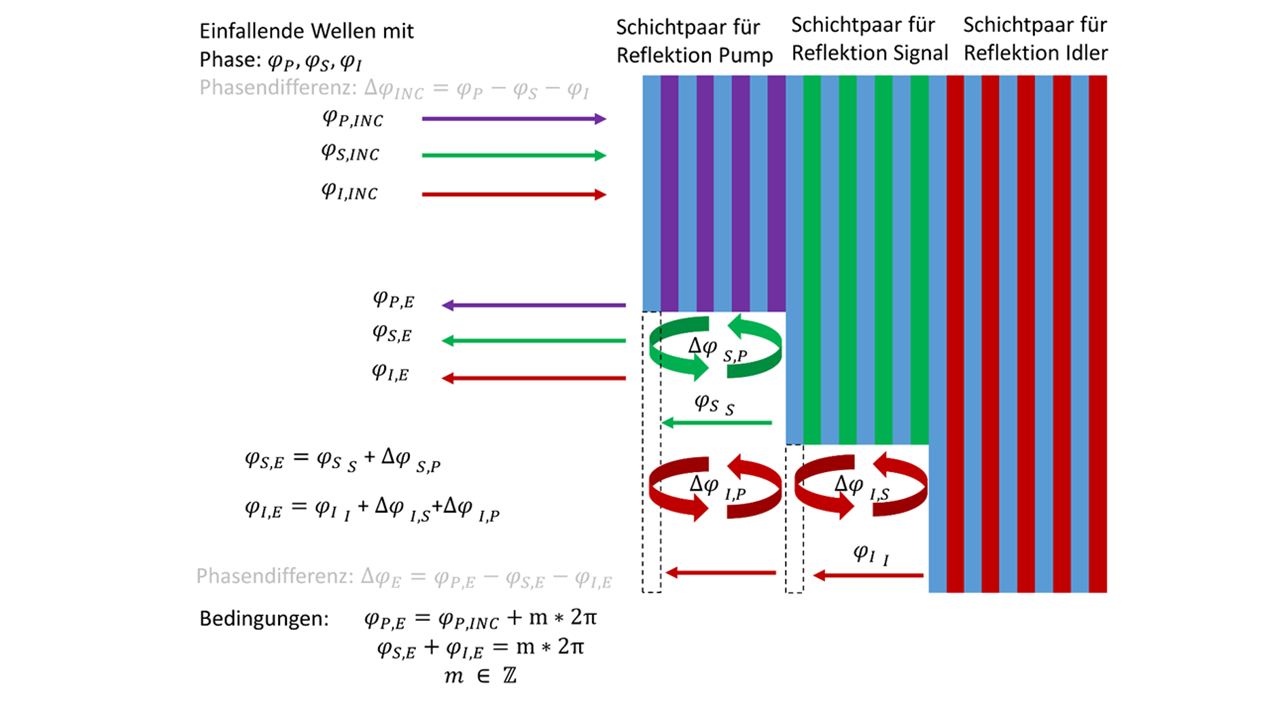
Fig. 1: Coating requirements for the symmetrical application of the invention. (IfSW; University of Stuttgart)